

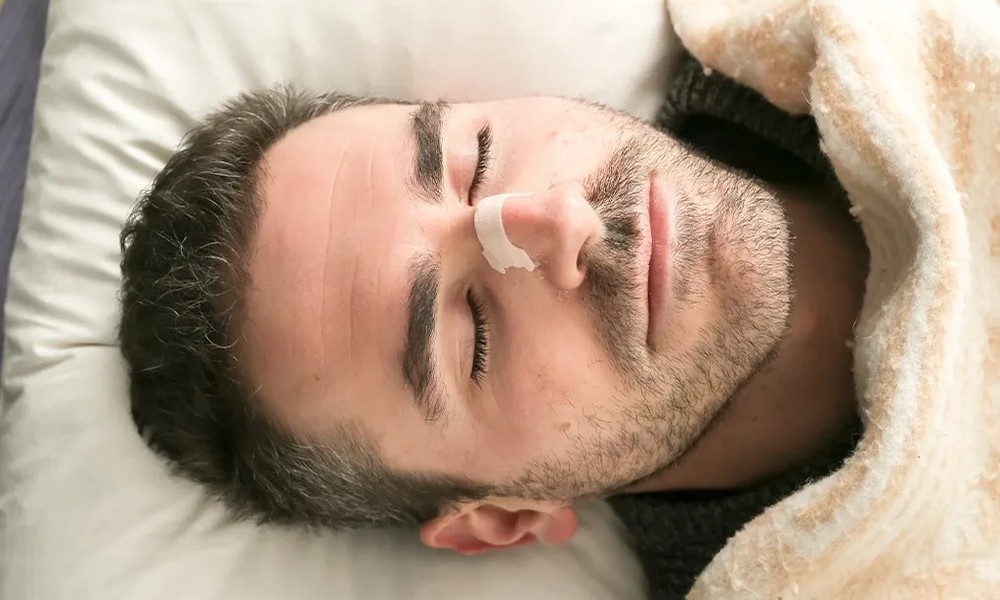
Most snoring solutions get marketed as if snoring is one problem with one cause. It isn’t. Snoring is a symptom, and the anatomy producing it varies considerably between people – which is why the same product works dramatically for one person and does nothing for the next. Nose strips for snoring sit in a specific category of intervention that addresses one particular cause very well and other causes not at all. Understanding which category a specific snoring problem falls into is what determines whether nasal strips are the right tool or a distraction from a different solution entirely.
The Nasal Valve Problem
The nasal valve is the narrowest point of the nasal airway – a structural bottleneck sitting just inside the nostril where cartilage meets the nasal lining. In people with naturally narrow nasal valves, or anyone whose nasal tissues swell from congestion, this point creates serious resistance to airflow. When resistance is high enough, the body switches to mouth breathing during sleep. Mouth breathing bypasses the nose’s humidification function, dries the soft palate and uvula, and dramatically increases vibration of soft tissues further back in the airway. The snoring sound isn’t coming from the nose. It’s coming from tissues that dried out because the nose wasn’t doing its job.
What the Strip Mechanism Actually Does
Nasal strips don’t dilate nostrils by pushing outward from inside – they lift the lateral nasal wall by pulling it outward from the skin surface. The embedded spring stores tension when flattened against the nose and tries to return to its resting shape, pulling the nasal sidewall with it. This widens the nasal valve area specifically – not the nostril opening visible from the front, but the internal angle where restriction actually occurs. People who try strips and feel no airflow improvement often have restriction further back, where an external strip has no mechanical reach regardless of how correctly it’s applied.
Testing Whether Nasal Restriction Is the Problem
There’s a simple assessment that ear, nose and throat specialists use clinically. Place a finger on each cheek, press gently outward to widen the nasal sidewalls, and breathe through the nose. If airflow improves noticeably, the nasal valve is contributing to restriction and a strip is likely to help. If there’s no change, the restriction is elsewhere and strips will produce limited improvement regardless. Nose strips for snoring used by people who’ve confirmed nasal valve involvement this way show consistently better outcomes than strips bought and tried without any understanding of whether nasal anatomy is actually relevant to the specific snoring pattern in question.
Allergic Rhinitis Creates a Specific Pattern
Seasonal snorers – people whose partners report snoring dramatically worsens in spring or after dusty environments – are often dealing with allergic swelling of the nasal turbinates rather than structural narrowing. The inferior turbinate swells in response to allergen exposure and can reduce nasal airway volume considerably. Nose strips for snoring provide mechanical compensation during sleep, but they work best when allergen load is also being managed. Turbinate swelling severe enough creates restriction that exceeds what external dilation alone can compensate for – the strip helps, but it isn’t doing the full job on its own.
Application Errors That Eliminate Results
The strip needs to sit across the lower nasal bridge – not the bony bridge higher up, where it has no effect on the nasal valve below. Skin preparation matters more than most people realise. Facial oils, moisturiser residue, and post-shower moisture all reduce adhesion within the first hour of sleep – exactly when snoring typically begins as muscle tone drops. Cleaning the placement area with an alcohol wipe and allowing it to dry completely before application makes a genuine difference to how well the strip maintains contact through the night.
When Snoring Needs Medical Attention
Snoring accompanied by witnessed breathing pauses, gasping, or choking sounds is not primary snoring. It’s a clinical indicator of obstructive sleep apnoea – a condition where the airway collapses repeatedly, causing oxygen desaturation the brain responds to by partially waking the body. Daytime sleepiness despite adequate time in bed, morning headaches, and concentration difficulties are the downstream symptoms. No external nasal strip addresses airway collapse, and using one to manage what turns out to be sleep apnoea delays a diagnosis with genuine long-term health implications.
Conclusion
Snoring driven by nasal restriction responds well to mechanical dilation – but the key word is driven. Nose strips for snoring work precisely within their anatomical scope, and the people getting the most from them are those who’ve confirmed that nasal airflow is actually the limiting factor in their specific situation. Applied correctly, on prepared skin, by someone whose snoring genuinely has a nasal component, they are one of the more effective non-invasive sleep interventions available without a prescription or a referral.
